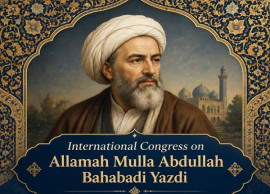

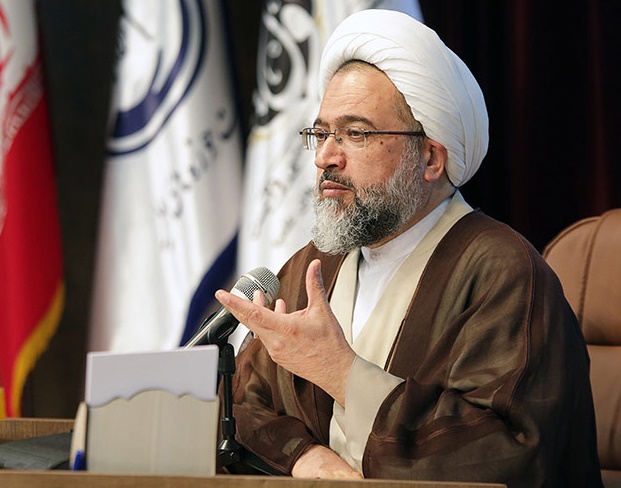
Hojjatoleslam Dr. Seyyed Ali Hosseinizad; Vice President of Research at the Research Institute of Quran and Hadith:
More importantly than understanding Allameh Mulla Abdullah Bahabadi as an individual detached from context, we need to recognize that he exists between two intellectual civilizations: one being the Shiraz School, represented by figures like Dashtaki and Davani, and the other being Qazvin and the Najaf School during the time of the sacred Ardebili (Mulla Abdullah was present in both the Shiraz and Najaf schools).
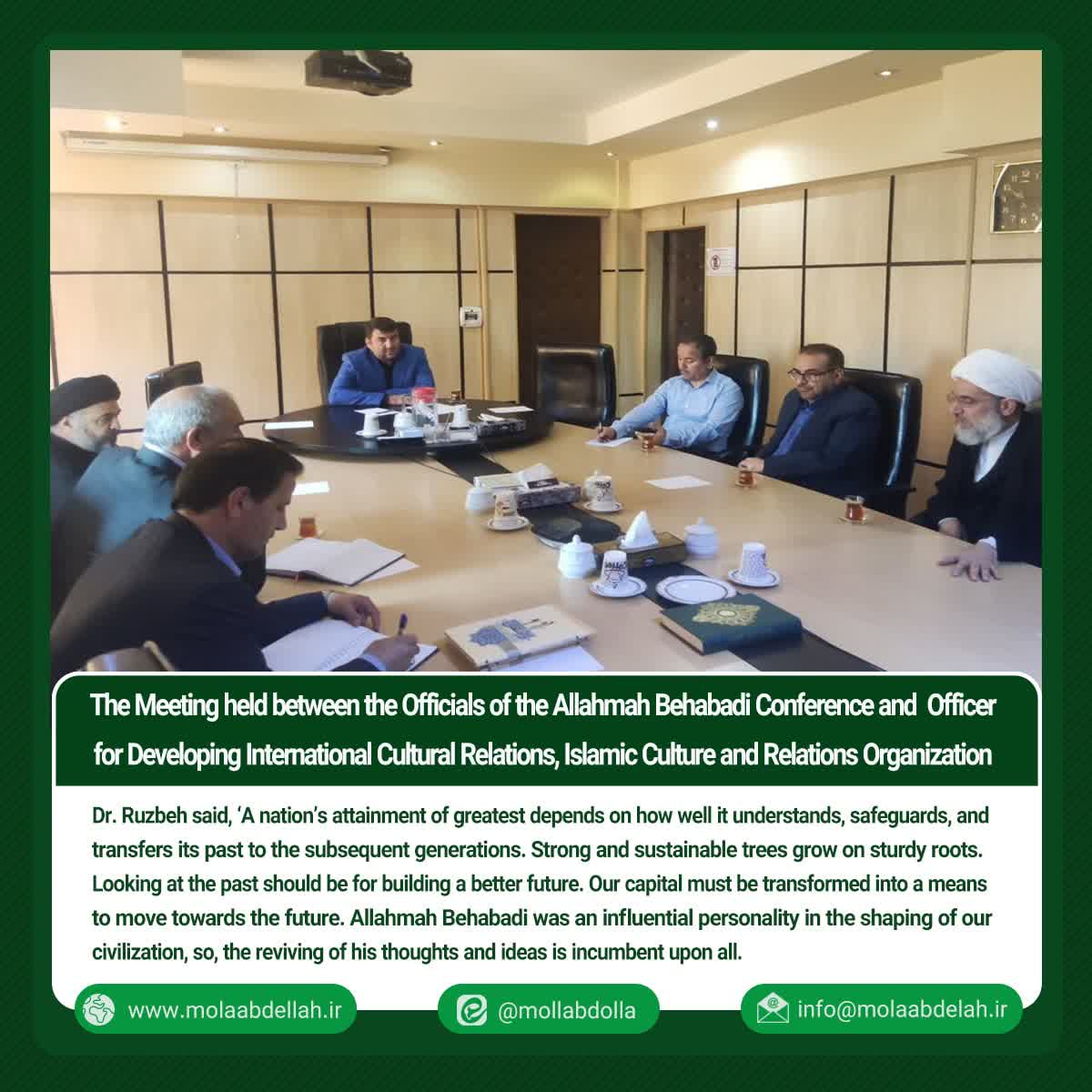
After welcoming, greeting and thanking the officials of the Allahmah Behabadi for their efforts, Dr. Ruzbeh said, ‘A nation’s attainment of greatest depends on how well it understands, safeguards, and transfers its past to the subsequent generations. Strong and sustainable trees grow on sturdy roots. Looking at the past should be for building a better future. Our capital must be transformed into a means to move towards the future. Allahmah Behabadi was an influential personality in the shaping of our civilization, so, the reviving of his thoughts and ideas is incumbent upon all.’
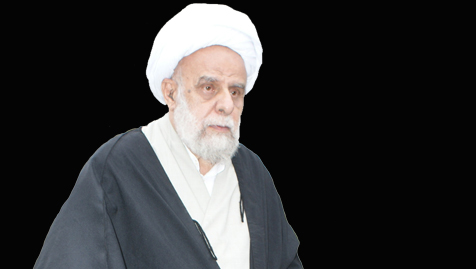
Would you compare Mullah Abdullah's gloss on Tahzib with Muzafar's logic? Can we say that Mullah Abdullah's gloss represents the school of Shiraz and Muzafar's work represents the school of Najaf?
- Video Field: https://www.youtube.com/watch?v=iKPw6-cTpIA
The common tradition of Shiite scientific fields is that if a scholar has been able to write a work that is the most common logical book in its level among Shiite fields and even sometimes non-Shiite fields for several centuries, it indicates positive eligibility. That is the effect. Among the positive conditions of the margin, we can avoid unnecessary and boring expressions, fluent and eloquent writing, the author's mastery of the topics of logic and the manner of transmission.