
Supreme Leader of the Revolution: Seminaries Need Transformation / It Is Unreasonable for the Seminary to Set Itself Aside from the Requirements of Religious Governance, as God Has Sent the Prophet (PBUH) for the Governance of the Faith / The Seminary Is Obligated to Guide Society
In a meeting with a group of managers, teachers, and students from Jamia al-Zahra, Ayatollah Khamenei emphasized that transformation in the seminaries and their modernization are necessary to address the new issues of society.
The Leader of the Revolution described the expansion of authentic religious knowledge among the general public as essential for the movement towards an Islamic civilization.
Ayatollah Khamenei regarded transformation as a natural and inevitable phenomenon in the world and stated that if the reins of transformation are in the hands of wise and religious individuals, society and humanity will prosper. However, without that, transformation can lead to misguidance and decline, just as irrational evils have become commonplace in today’s Western societies.
He also considered seminaries, like other institutions, in need of transformation, adding that the seminary exists for the people, to promote and advance religion, and to establish religious governance; thus, it must evolve to fulfill its duties correctly, especially given the changing nature of society.
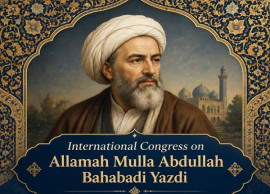
He praised Allameh Mulla Abdullah Bahabadi Yazdi as an example of a Shia scholar who engaged in political and social issues during the Safavid era and contributed to the civilization of the Shia state. “This religious scholar, contrary to what some may think today, was actively involved in political activities.”
He lived concurrently with Shah Tahmasb. When the Shah went to Iraq—specifically Najaf—for pilgrimage, he found the situation there chaotic and appointed Mulla Abdullah as the administrator of the holy shrine of Amir al-Mu’minin (peace be upon him). At that time, the one who was the head and treasurer of the Shrine of Amir al-Mu’minin was also the head of Najaf. Mulla Abdullah was the owner of ‘Hasheyeh’ (a marginal note) on the governor of Najaf—something most may not know. Interestingly, the governance in Mulla Abdullah’s family lasted for many years, until the time of Ja’far Kashif al-Ghita, and after him, the Malali family (the Mullahs) governed.
The statements of the Supreme Leader indicate the connection between religion and governance and social affairs, which has historical precedence in Islam.
This historical and analytical perspective on the activities of scholars, especially during the Safavid era and their lasting influence, can help in a better understanding of the current responsibilities of seminaries and scholars, demonstrating that a strong bond between knowledge and politics has historically existed in Islamic histor